Research a complex topic
Collect papers, articles, and notes in one collection. Search the complete material, compare sources, and ask questions with citations back to the original passages.
Getting started
Capture something worth reading, open it in the reader, and let FlowReader remember where you stopped and what mattered.
01
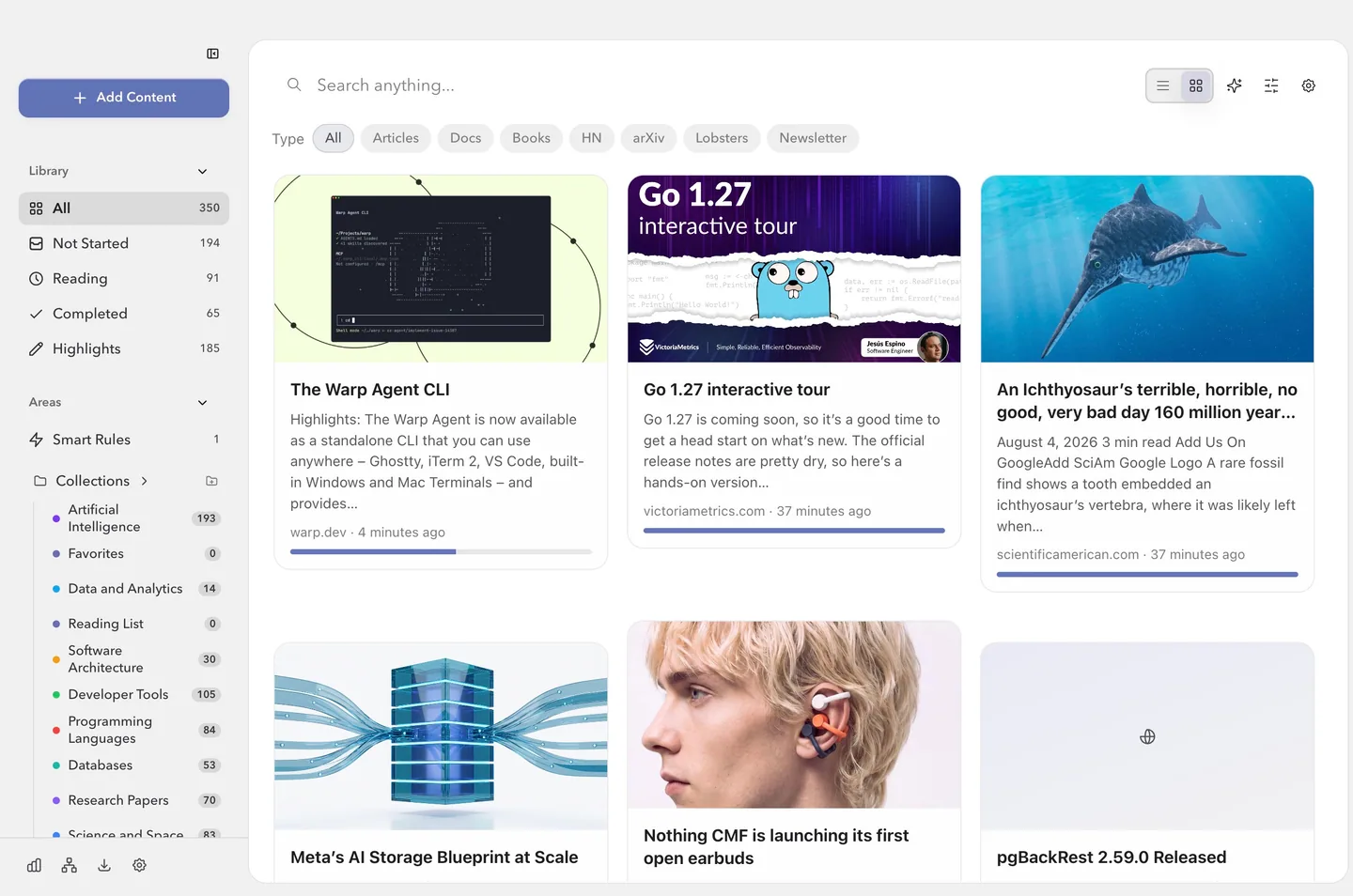
Add the browser extension for Chromium or Firefox, or install the desktop app. Both share the same library and the same reader, so you can start on one and continue on the other.
02
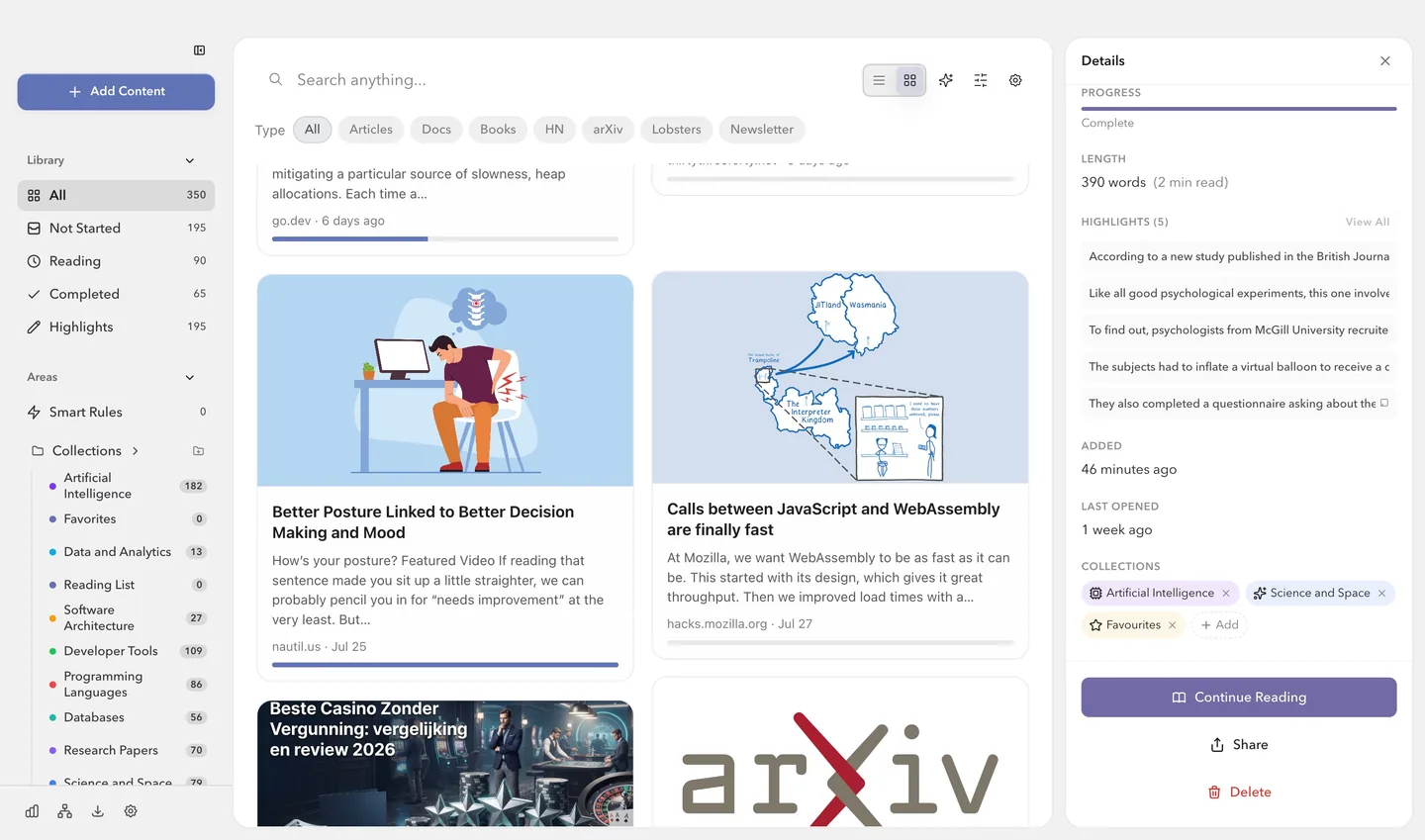
Capture the page you are on, import a PDF or an ebook, paste some text, or subscribe to a feed. Whatever the source, it lands in the archive as a clean, readable document.
03
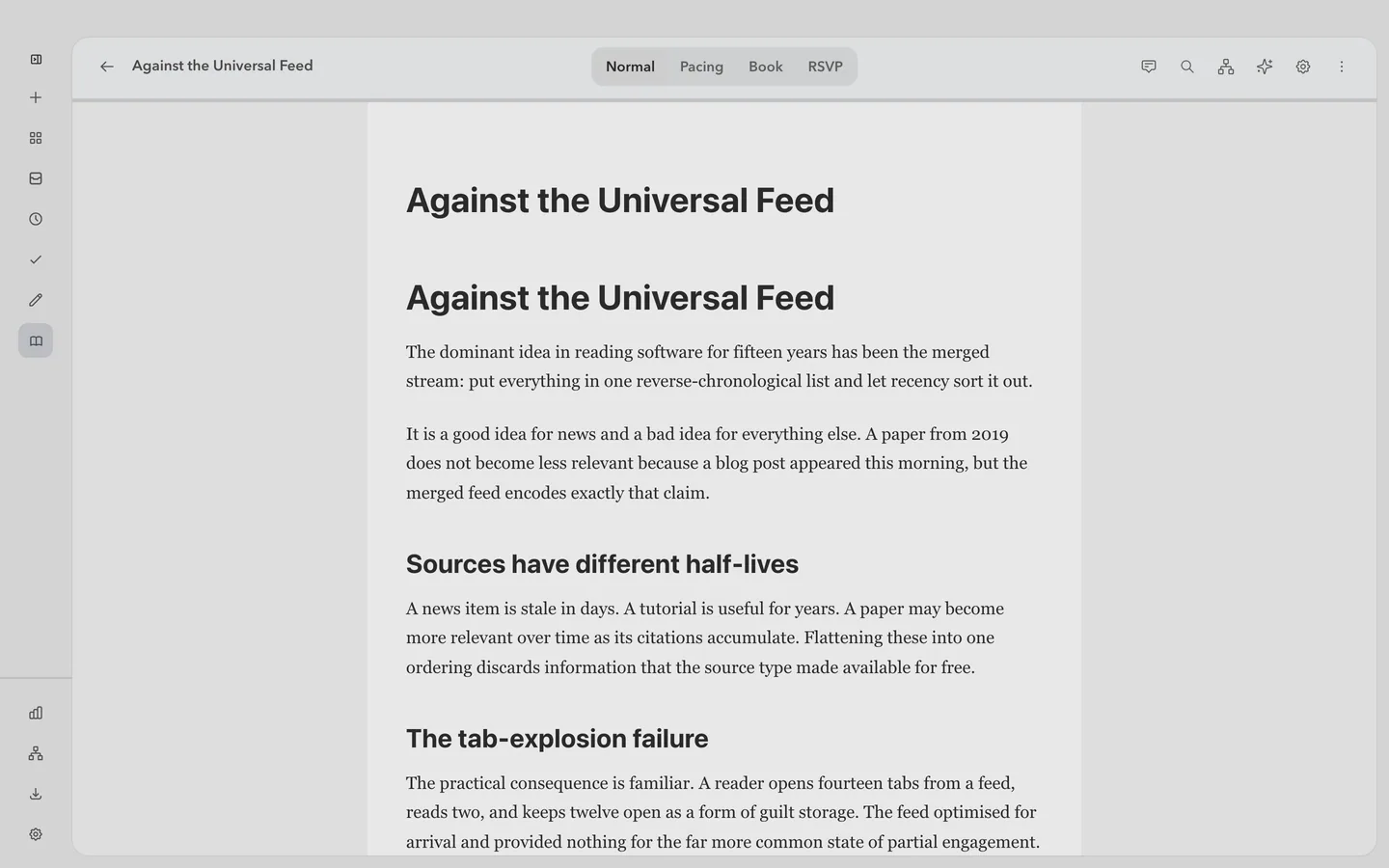
Normal for ordinary reading, Pacing when your attention needs a nudge, Book for anything with chapters, RSVP for triage. Press M to cycle without leaving the text.
04
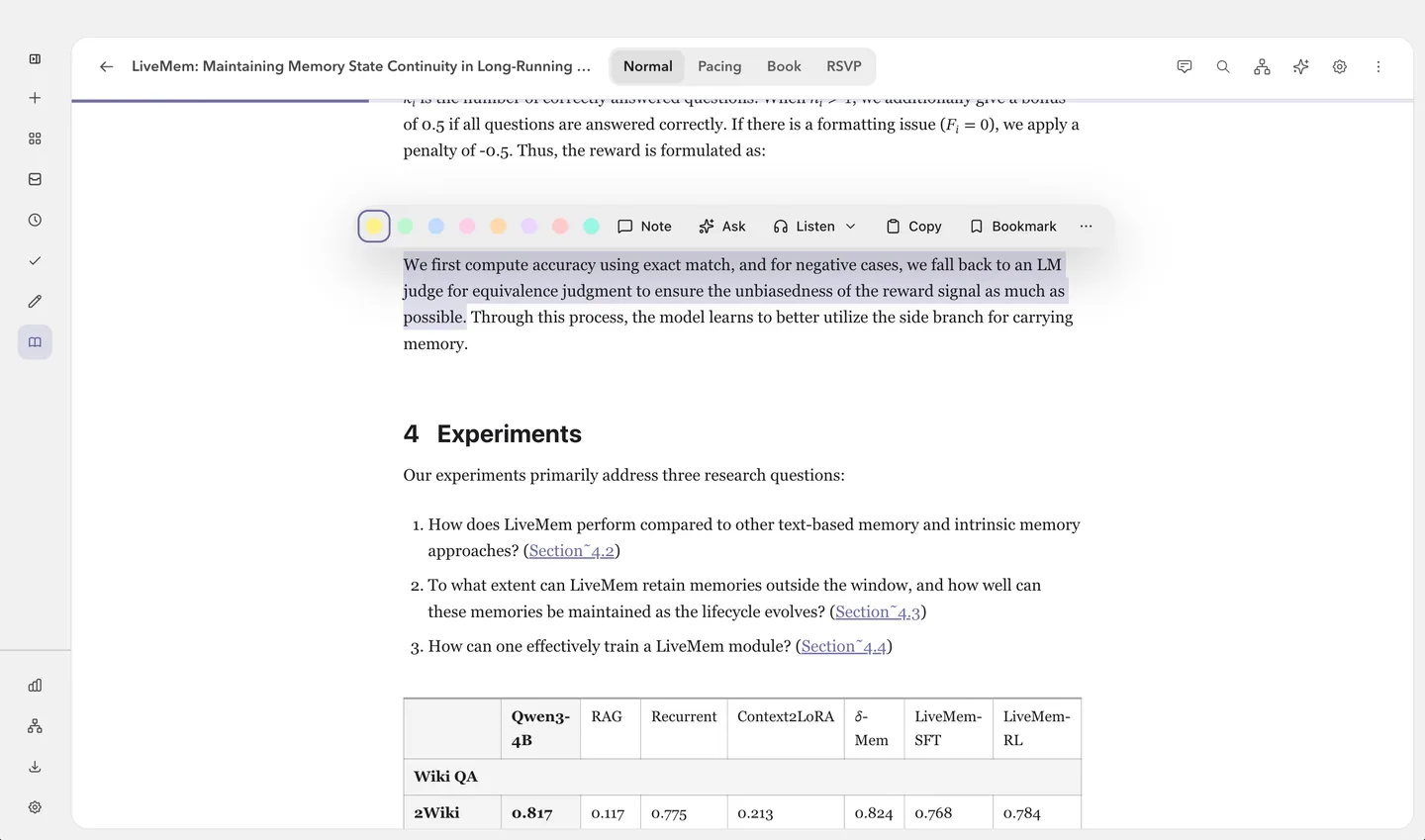
Highlight passages, attach notes to a selection, and drop bookmarks. Close the item whenever you like. FlowReader reopens at the precise spot you stopped.
05
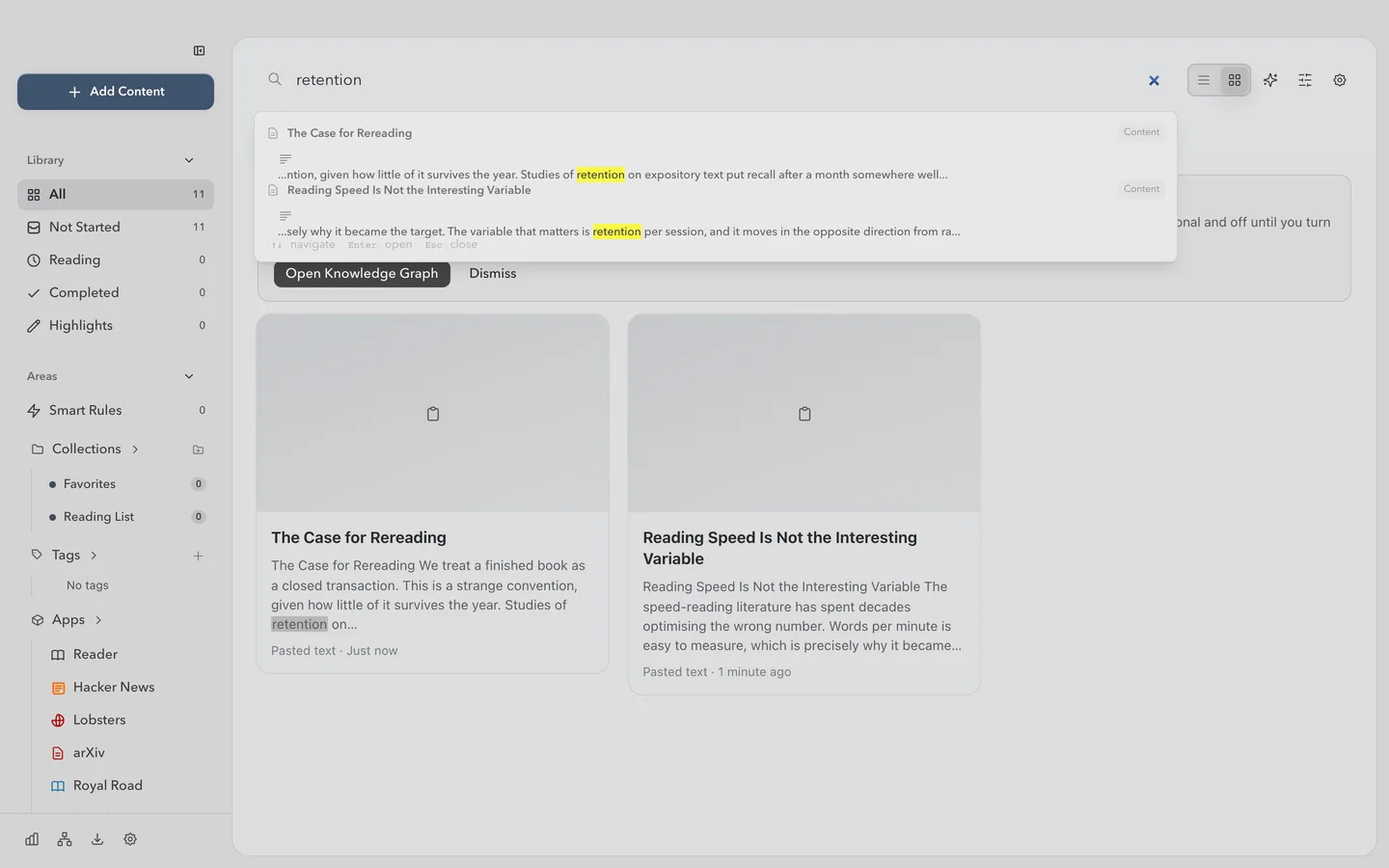
Search across full text, notes, highlights and chapter titles. Results carry anchors that reopen the reader at the exact matching passage, not just the item.
That is the whole loop. Everything else builds on those five steps: the reading modes, the sources, the knowledge graph.
Real workflows
Collect papers, articles, and notes in one collection. Search the complete material, compare sources, and ask questions with citations back to the original passages.
Follow RSS feeds, newsletters, arXiv topics, Hacker News and Lobsters, and let a Flow collect from publishers you choose.
Use reading modes, progress tracking, smart organization, and backlog reviews to decide what to read next.
Get the desktop app or the browser extension.